DeepSeek V4 API Review 2026: Flash vs Pro, Migration Guide, and Production Rollout Checklist
deepseek-v4-flash and deepseek-v4-pro, publish official pricing for both, and document 1M context plus 384K max output. Reuters separately reported on the same date that V4 launched in preview, which means teams can evaluate it now but should still treat behavior as subject to change before finalization. DeepSeek API Docs DeepSeek Models & Pricing Reuters via Investing.comThat changes the practical decision:
- DeepSeek V4 Flash is now a real low-cost production routing option
- DeepSeek V4 Pro is now a real premium DeepSeek route worth benchmarking
- Claude Opus 4.7 is now the current Anthropic flagship baseline, not Opus 4.6
- GPT-5.4 remains the most clearly documented OpenAI flagship for professional and coding work
See DeepSeek V4 API details
Jump to migration guide
Who this guide is for
This article is most useful if you are one of these:
- an engineering lead deciding whether to add DeepSeek V4 to a routing stack
- a platform team migrating away from
deepseek-chatanddeepseek-reasoner - a product team trying to lower coding-model cost without losing too much quality
- an AI team deciding when to route to Flash, when to escalate to Pro, and when to keep GPT-5.4 or Claude Opus 4.7
TL;DR
- Use DeepSeek V4 Flash first if your main goal is cost-efficient coding, long-context routing, and high-throughput agent workloads. Its official pricing is $0.14 input / $0.28 output per 1M tokens, with 1M context and 384K max output. DeepSeek Models & Pricing
- Use DeepSeek V4 Pro if your tasks are more reasoning-heavy or coding-heavy and you want a step up from Flash without paying Claude-level prices. Official pricing is $1.74 input / $3.48 output per 1M tokens. DeepSeek Models & Pricing
- Use Claude Opus 4.7 when you want Anthropic's current best generally available coding and agent model and can tolerate premium pricing at $5 / $25 per 1M tokens. Anthropic Claude Opus 4.7
- Use GPT-5.4 when you want the official OpenAI flagship route, 1,050,000 context, 128,000 max output, and full OpenAI platform support at $2.50 / $15.00. OpenAI Pricing OpenAI GPT-5.4 Model
- Do not migrate blindly in one step. DeepSeek V4 is publicly documented and usable in preview, but preview still means you should evaluate with real workloads, keep rollback paths, and separate Flash from Pro in routing logic. Reuters via Investing.com
What DeepSeek V4 is now
The DeepSeek V4 conversation is much simpler than it was in early April.
- public API model IDs:
deepseek-v4-flash,deepseek-v4-pro - context length:
1M - max output:
384K - thinking mode: supported
- tool calls: supported
deepseek-chatanddeepseek-reasonerremain available for compatibility, but are marked for deprecation on July 24, 2026
DeepSeek V4 Flash vs Pro: how to choose
This is the most important decision in the whole DeepSeek V4 rollout.
| Question | DeepSeek V4 Flash | DeepSeek V4 Pro |
|---|---|---|
| Official input pricing | $0.14 / 1M cache miss | $1.74 / 1M cache miss |
| Official output pricing | $0.28 / 1M | $3.48 / 1M |
| Context | 1M | 1M |
| Max output | 384K | 384K |
| Best role | Broad default route | Higher-intelligence premium route |
| Best first test | High-volume coding, routing, repo analysis | Harder coding and reasoning tasks |
| Main tradeoff | Lower ceiling than premium models | Higher cost than Flash |
Choose Flash if your default question is "can we do this cheaply at scale?"
Flash is the right first route to test when you want:
- a low-cost default coding model
- a cheap long-context route
- a model for agent systems where output cost matters
- a model you can expose broadly across teams without runaway spend
If your team is currently using a more expensive frontier model for simple coding, summarization, repo reading, or moderate agent workflows, Flash is the most obvious substitution candidate.
Choose Pro if your default question is "where do we need more intelligence?"
Pro is the better route when you want:
- stronger coding or reasoning quality than your budget path
- more difficult multi-step analysis
- longer-form structured outputs
- a premium route that still costs less than Claude Opus 4.7 on output
The simplest mental model is:
- Flash = default route
- Pro = escalation route
That framing usually works better in production than trying to force one expensive model into every workload.
Is DeepSeek V4 worth it for coding teams?
For many coding teams, yes, but not as a blind full replacement.
DeepSeek V4 is worth serious evaluation if:
- you do a lot of code generation, code review, repo reading, or long-context coding work
- your current output-token bill is painful
- you want a cheaper default route for agents and coding assistants
- you are willing to run a staged rollout instead of a one-shot migration
It is less obviously worth it if:
- your hardest workflows already justify premium closed-model pricing
- your team depends on one vendor's platform features more than model economics
- you do not yet have an eval set and rollback path
How DeepSeek V4 compares to GPT-5.4 and Claude Opus 4.7
If your team is deciding across model families, the most useful baseline is no longer Claude Opus 4.6. The current practical baseline is:
- DeepSeek V4 Flash
- DeepSeek V4 Pro
- GPT-5.4
- Claude Opus 4.7
| Model | Input | Output | Context | Max output | Best fit |
|---|---|---|---|---|---|
| DeepSeek V4 Flash | $0.14 | $0.28 | 1M | 384K | Cheapest long-context production route |
| DeepSeek V4 Pro | $1.74 | $3.48 | 1M | 384K | Premium DeepSeek route |
| GPT-5.4 | $2.50 | $15.00 | 1,050,000 | 128K | Official OpenAI flagship |
| Claude Opus 4.7 | $5.00 | $25.00 | 1M | 128K | Anthropic's strongest GA coding and agent route |
Where DeepSeek V4 is strongest
Based on the officially documented feature set and pricing shape, DeepSeek V4 is strongest where these conditions are true:
- long context matters
- output cost matters
- coding and agent workloads dominate
- you want to separate a cheap default path from a stronger premium path
That combination is rare. It is also why DeepSeek V4 now matters much more than a normal model launch.
Where GPT-5.4 still makes sense
GPT-5.4 still makes sense when:
- you want official OpenAI platform support end-to-end
- your team already depends on OpenAI tools and integrations
- you want the official flagship OpenAI coding and professional-work route
- you care more about platform consistency than raw output cost
Where Claude Opus 4.7 still makes sense
Claude Opus 4.7 is the right baseline when:
- you want Anthropic's strongest generally available coding route
- your workflows depend on sustained agentic work
- you want Claude's evolving control surface around effort and long-running tasks
- your team is comfortable paying a premium for quality and reliability
What DeepSeek V4 actually costs in real workloads
The official per-million-token prices are useful, but teams do not buy "one million tokens." They buy outcomes.
Below are simpler workload-shaped examples based on official public pricing, using rough token volumes purely to show cost shape.

Scenario 1: Repository analysis
Assume:
- 250K input tokens
- 20K output tokens
Estimated API spend:
- DeepSeek V4 Flash: about $0.04 input + $0.01 output
- DeepSeek V4 Pro: about $0.44 input + $0.07 output
- GPT-5.4: about $0.63 input + $0.30 output
- Claude Opus 4.7: about $1.25 input + $0.50 output
This is why Flash is such an obvious first test for codebase reading, dependency audits, and repo summarization.
Scenario 2: Multi-turn coding agent task
Assume:
- 120K input tokens
- 80K output tokens
Estimated API spend:
- DeepSeek V4 Flash: about $0.02 input + $0.02 output
- DeepSeek V4 Pro: about $0.21 input + $0.28 output
- GPT-5.4: about $0.30 input + $1.20 output
- Claude Opus 4.7: about $0.60 input + $2.00 output
The main lesson is not that premium models are "bad." The lesson is that output-heavy workloads punish expensive output pricing.
Scenario 3: Long document or legal review
Assume:
- 400K input tokens
- 25K output tokens
What these examples mean
If your product does mostly:
- code generation
- code review
- long repo reading
- long PDF or policy review
- multi-step agent loops
Where DeepSeek V4 still has limitations
A useful review article should not pretend every strength is universal.
1. Preview status still matters
2. You still need your own eval set
- agent loops
- code review precision
- diff quality
- long-running tasks
- schema reliability
3. Premium closed models may still win on your hardest tasks
Claude Opus 4.7 and GPT-5.4 remain important because some workloads justify paying more:
- highest-risk code changes
- hardest agentic tasks
- enterprise workflows where failure costs are high
- environments where platform tooling matters as much as model price
The right comparison is not "which model wins on the internet." It is "which model is cheapest for the tasks we can safely route to it."
When should you still use Claude Opus 4.7 or GPT-5.4?
Keep Claude Opus 4.7 in the stack if:
- your team handles the hardest coding and review tasks
- you need Anthropic's strongest generally available model
- agent reliability matters more than token cost
Keep GPT-5.4 in the stack if:
- your team is already heavily invested in the OpenAI platform
- you want the official OpenAI flagship route for professional and coding work
- your workflow depends on the surrounding OpenAI tools as much as the model itself
The most practical setup for many teams
For many real production stacks, the best answer is not "replace everything." It is:
- DeepSeek V4 Flash for cheap default routing
- DeepSeek V4 Pro for harder DeepSeek-appropriate workloads
- Claude Opus 4.7 or GPT-5.4 as premium fallback and escalation routes
That is usually a better architecture than trying to crown one universal winner.
How to migrate from deepseek-chat and deepseek-reasoner
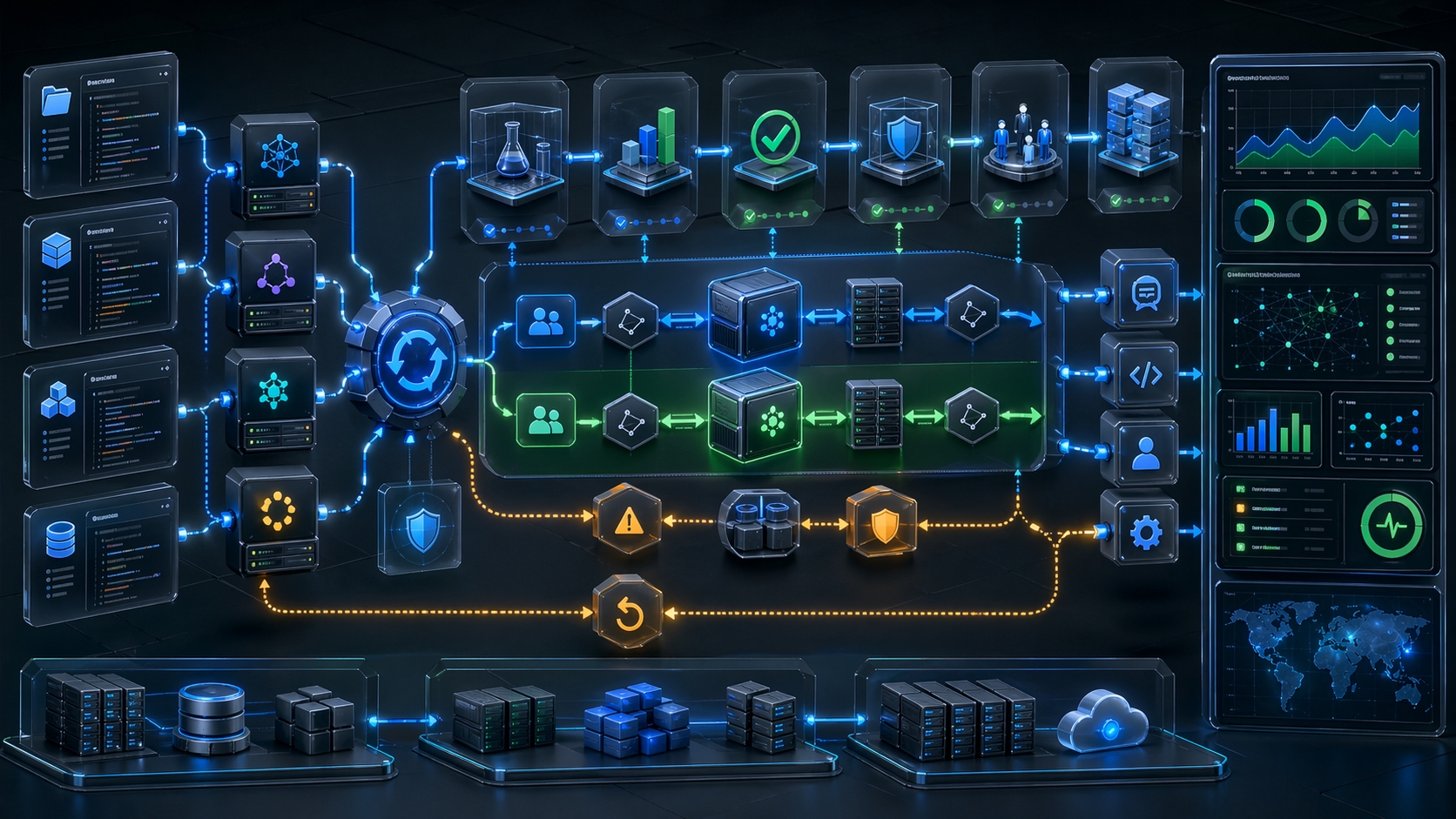
This is one of the most practical reasons to publish this guide now.
DeepSeek's official docs say:
deepseek-chatis scheduled for deprecation on July 24, 2026deepseek-reasoneris scheduled for deprecation on July 24, 2026- for compatibility, they map to non-thinking and thinking modes of
deepseek-v4-flash
Recommended migration path
- Inventory every current DeepSeek route in production
Find where your app still references:
deepseek-chatdeepseek-reasoner- hard-coded prompt logic tied to old output behavior
- Test
deepseek-v4-flashfirst
Because the compatibility aliases point to Flash behavior, Flash is usually the lowest-risk first migration target.
- Promote only specific workloads to Pro
Do not swap everything to Pro by default. Give Pro a narrow job first:
- difficult coding tasks
- deeper analysis
- high-value escalation paths
- Keep rollback routes active
Preview means you should be able to revert or re-route quickly if:
- quality drops
- latency spikes
- schema reliability changes
- tool use behaves differently
Migration table
| Old route | Short-term replacement | Longer-term recommendation |
|---|---|---|
deepseek-chat | deepseek-v4-flash non-thinking | Keep Flash as your low-cost default route |
deepseek-reasoner | deepseek-v4-flash thinking | Test whether Pro is better for your hardest tasks |
DeepSeek V4 production rollout checklist
If you are evaluating DeepSeek V4 for real use, use a rollout checklist like this:
- define 20 to 50 real tasks from your own workload
- separate simple default-route tasks from premium-route tasks
- benchmark Flash and Pro independently
- compare output quality, not just benchmark headlines
- measure cost per successful task, not just cost per token
- keep rollback routes for GPT-5.4 or Claude Opus 4.7
- version prompts and evaluation harnesses
- log tool-call failures and schema failures separately
- watch latency and retry patterns during preview
- decide in advance what counts as "good enough to promote"
This is the part many launch articles skip, and it is the part that actually determines whether a model saves money or creates hidden operational cost.
Recommended decision by team type
Team A: Cost-sensitive coding platform
Team B: Enterprise app with high-stakes outputs
Team C: Long-context product
DeepSeek V4 is unusually attractive because it combines:
- official 1M context
- very large 384K output
- unusually low output pricing
Team D: Mixed-model router
The cleanest stack for many teams now may be:
- DeepSeek V4 Flash for cheap default routing
- DeepSeek V4 Pro for harder reasoning and coding
- Claude Opus 4.7 or GPT-5.4 for premium escalation
Final verdict
DeepSeek V4 matters because it changes routing economics, not because it magically replaces every premium closed model.
The strongest conclusion right now is:
- Flash is a serious default route candidate
- Pro is a serious premium DeepSeek route
- GPT-5.4 and Claude Opus 4.7 still matter for premium and high-stakes workloads
- the best rollout is staged, not all-at-once
If your team wants one sentence of advice, it is this:
FAQ
Is DeepSeek V4 officially available now?
deepseek-v4-flash and deepseek-v4-pro, and Reuters reported on April 24, 2026 that DeepSeek launched preview versions of V4. DeepSeek API Docs Reuters via Investing.comWhich should I test first: Flash or Pro?
Is DeepSeek V4 worth it for coding teams?
Usually yes, if your team is cost-sensitive, output-heavy, or doing long-context coding work. The best fit is staged evaluation, not immediate full replacement.
Is DeepSeek V4 open-weight?
Is DeepSeek V4 cheaper than GPT-5.4 and Claude Opus 4.7?
Should I use DeepSeek V4 Flash or Pro for repository-scale coding work?
Should I replace Claude Opus 4.7 or GPT-5.4 immediately?
Usually no. The safer move is staged routing: test Flash first, evaluate Pro next, and keep premium fallbacks until you trust V4 on your real workloads.
What happens to deepseek-chat and deepseek-reasoner?
deepseek-v4-flash compatibility behavior. DeepSeek API DocsWhere can I find the official DeepSeek V4 API route details?
Sources
- DeepSeek API Docs
- DeepSeek Models & Pricing
- DeepSeek V4 Pro LICENSE on Hugging Face
- OpenAI API Pricing
- OpenAI GPT-5.4 Model
- Anthropic Claude Opus 4.7
- China's AI darling DeepSeek previews new model | Reuters via Investing.com